

Chainsaw Safety Essentials
Chainsaw Safety Guide
A chainsaw delivers fast, efficient cutting performance, but it also requires preparation, control and your full attention.
Safe operation starts before the chain begins to move. Understanding your machine, wearing the appropriate protective equipment and checking both the chainsaw and your surroundings can help reduce risk and keep you in control.
These principles provide a starting point for safer operation. They do not replace professional training or the operator's manual supplied with your chainsaw.
Prepare before you start
Chainsaw controls, starting procedures and approved cutting equipment can vary between models. Before using your chainsaw, read the operator's manual and make sure you understand how to start and stop the machine, operate the chain brake and use its safety controls.
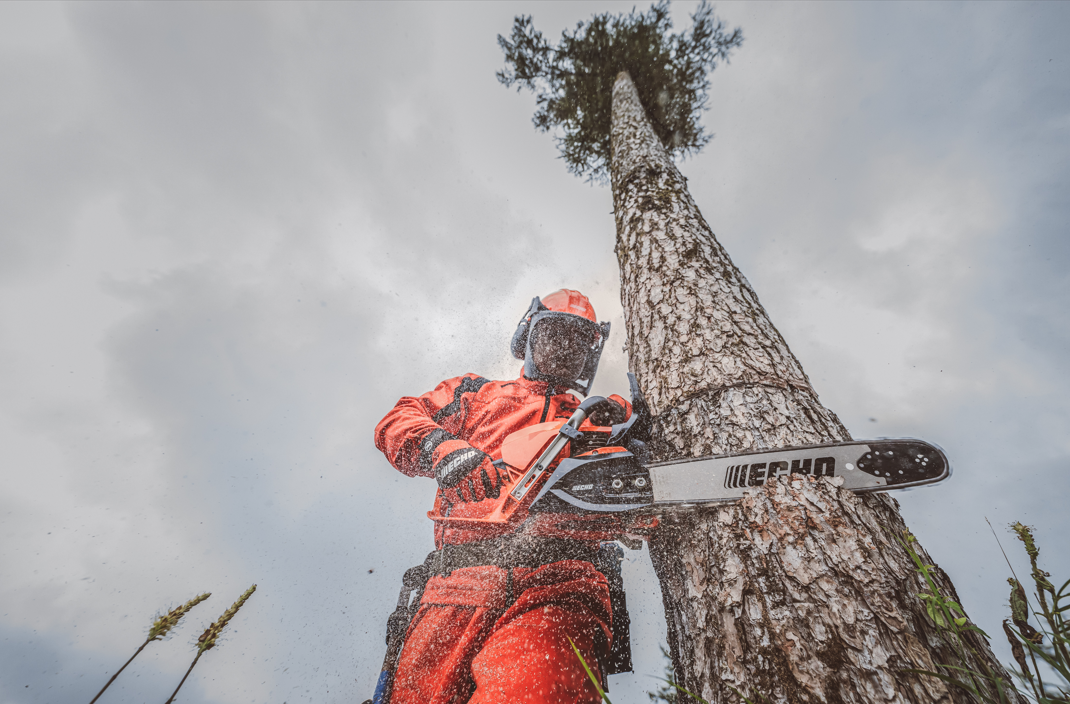
Always use the appropriate personal protective equipment (PPE) for chainsaw work. This includes suitable head, eye and hearing protection, protective gloves, chainsaw protective legwear, appropriate protective footwear and close-fitting work clothing.
Before every job, inspect the chainsaw. Check the chain condition and tension, guide bar, chain brake, chain catcher, controls, handles and fasteners, as well as the fuel, chain oil or battery condition depending on your model.
Only use guide bars and chains approved for the machine. ECHO matches cutting equipment according to specifications such as bar length, pitch, gauge and drive-link count.
The work area matters too. Check the ground conditions, surrounding obstacles, overhead branches and the material you plan to cut. Keep other people and animals away from the working area and ensure you have stable footing and sufficient visibility before starting.
Stay in control while cutting
Maintaining control is fundamental to safe chainsaw use.
Use a secure two-handed grip, maintain a stable stance and avoid overreaching. Remain aware of the position of the guide-bar nose throughout the cut and allow the chain to cut without forcing the machine.
One of the key risks to understand is kickback. This can occur when the guide-bar nose comes into contact with an object or when the chain becomes pinched during a cut.
Good technique, a sharp and correctly tensioned chain and approved cutting equipment all contribute to safer, more controlled operation. The chain brake is an important safety feature, but it should never be considered a substitute for correct cutting technique.
Avoid working in a position where you cannot maintain proper control of the machine. Fatigue can also affect concentration and control, so take appropriate breaks during longer working sessions.
Top-handle chainsaws require particular attention. These specialist machines are intended for trained professional arborists carrying out tree work and should not be considered general-purpose chainsaws for casual one-handed use. For normal ground-based cutting, use an appropriate rear-handle chainsaw.
Know your machine and when to stop
A well-maintained cutting system makes a significant difference to performance and control.
Keep the chain sharp and correctly tensioned, the guide bar in good condition and the lubrication system working correctly. A dull or poorly maintained chain can require more effort and affect the way the chainsaw behaves during cutting.
Stop work if something doesn't feel right. A loose chain, abnormal vibration, loss of chain lubrication, damaged controls or safety features, or an unexpected change in cutting performance should all be investigated before continuing.
You should also stop if weather, visibility, ground conditions or fatigue prevent you from maintaining safe control of the chainsaw.
Do not return a damaged or incorrectly functioning machine to service until the problem has been properly addressed.
Ultimately, chainsaw safety begins before you make the first cut. Know your machine, wear the right protection, inspect your equipment and work area, maintain control and keep the cutting system in good condition.
Preparation builds control, and control helps you work more safely and efficiently.